Binance vs Bitstamp: Which Is Better?
A full comparison of Binance and Bitstamp across fees, security, coins, features and support, so you can pick the exchange that fits how you trade.

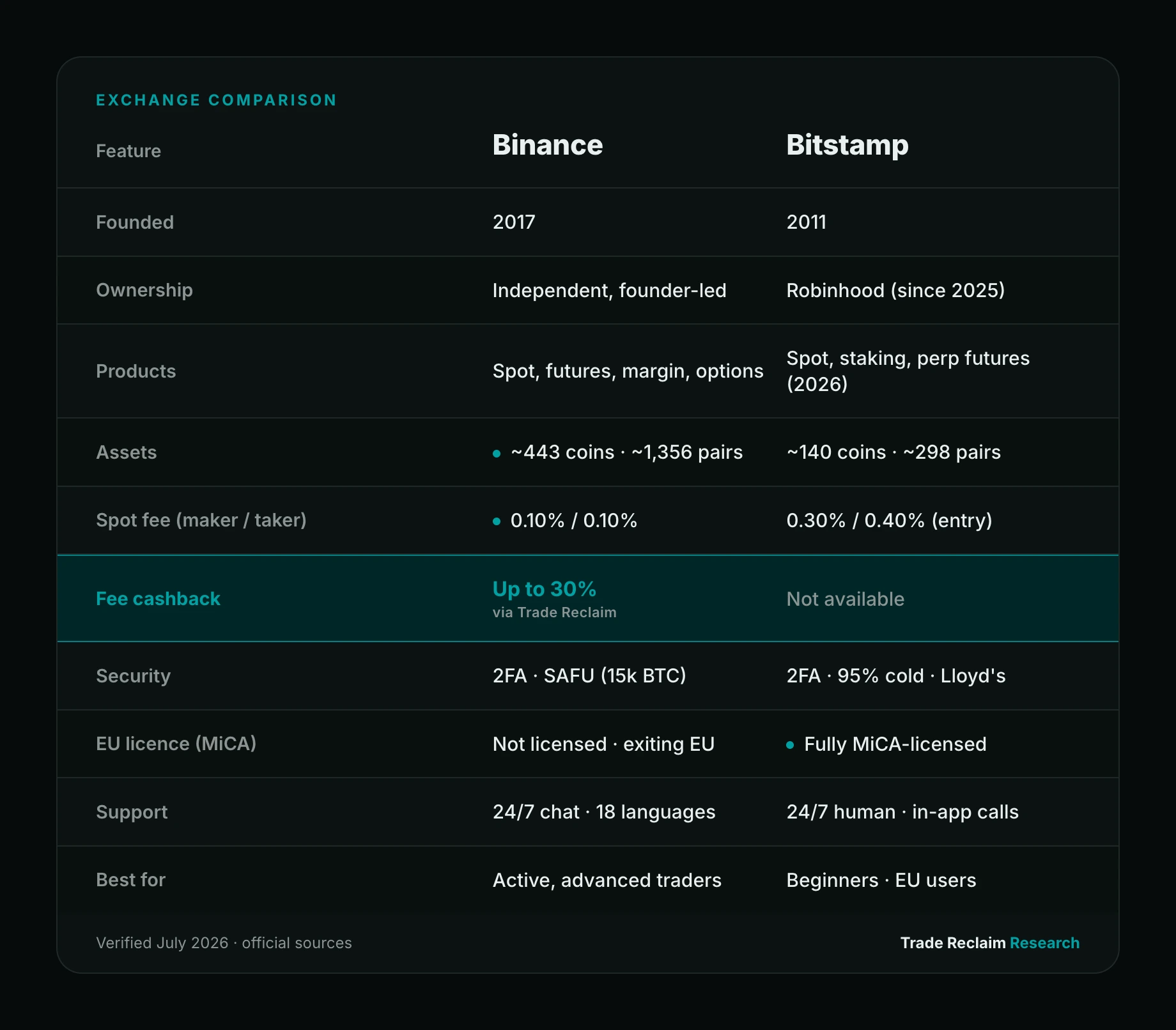
Binance and Bitstamp sit at two ends of the same market. Binance is the large, fast-moving venue with thousands of coins and every trading feature you can name. Bitstamp, running since 2011, trades on stability and a clean, regulated setup. Below is the full breakdown, and one detail worth flagging up front: Binance is a Trade Reclaim partner, so you can claim 30 to 50% of its trading fees back as cashback.
Overview of Binance and Bitstamp
Binance and Bitstamp are key players in the cryptocurrency world. Each offers unique features attracting different kinds of traders.
Binance launched in 2017, rapidly gaining global attention. It boasts a wide range of cryptocurrencies and advanced trading options.
Bitstamp, established in 2011, is known for its longevity and stability. It offers a secure and regulated environment for trading.
The differences between the two exchanges are noticeable. Binance is dynamic, often adding new coins and features. Bitstamp focuses on reliability and user safety.
Both exchanges have their dedicated user base. Binance appeals to tech-savvy traders interested in diverse coins and complex trades. Bitstamp is favored by those who value consistency and security.
Here's a quick comparison:
Security and Regulatory Compliance
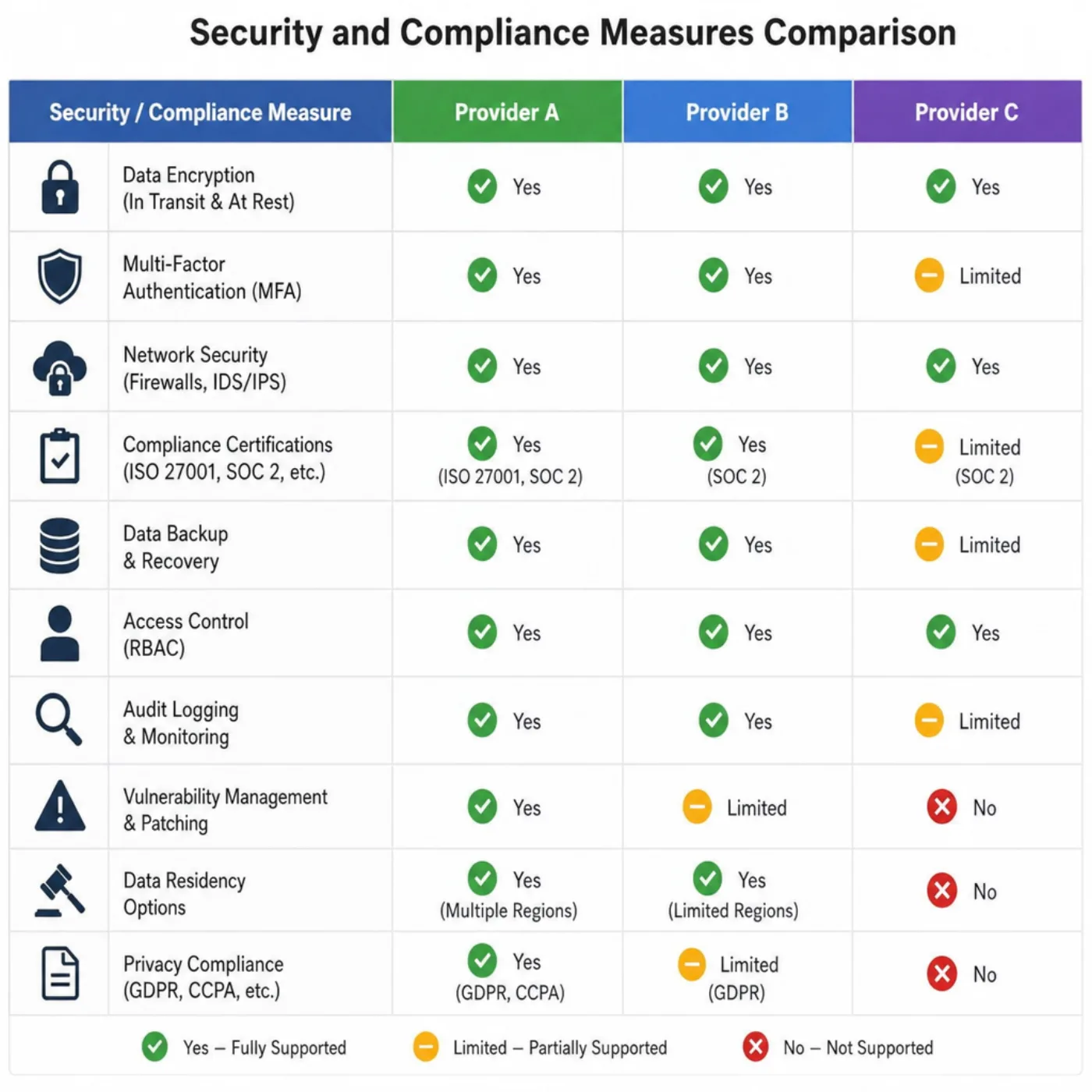
Security is a top priority for both Binance and Bitstamp. Each offers robust security features to protect user funds and data.
Binance uses two-factor authentication and has a withdrawal whitelist feature. These measures help prevent unauthorized access to accounts.
Bitstamp is renowned for its strict regulatory compliance. It is licensed by the Luxembourg Financial Industry Supervisory Commission, offering users peace of mind.
Despite regulatory challenges in some countries, Binance continues its global operations. It constantly updates its compliance measures to adhere to local regulations.
Bitstamp's long history without major security breaches enhances its trustworthy reputation. Its commitment to adhering to anti-money laundering (AML) and know your customer (KYC) standards stands out.
In summary, both exchanges prioritize user security but approach it differently:
Understanding these security measures can guide traders in choosing the right platform.
Supported Cryptocurrencies and Trading Pairs
When it comes to cryptocurrency variety, Binance stands out. It offers an extensive list of cryptocurrencies, including numerous altcoins unavailable on Bitstamp. This wide array attracts traders looking for diversity.
Bitstamp, in contrast, offers fewer cryptocurrencies. However, it emphasizes reliability and liquidity over quantity, appealing to traders seeking stable and well-established coins.
Trading pairs are a key consideration for traders. Binance provides an impressive range, catering to both popular and niche markets. This extensive selection is ideal for those looking to explore various trading strategies.
Bitstamp's trading pairs are more limited, but they include popular fiat-to-crypto pairs. This is beneficial for users interested in traditional currency transactions.
Here's a quick comparison:
Choosing the right exchange depends on your trading needs and the importance you place on cryptocurrency diversity.
Trading Fees and Costs
Trading fees are crucial when choosing a crypto exchange. Binance is known for its low fees. This makes it appealing for high-frequency traders.
Bitstamp, on the other hand, has higher fees. However, fees decrease with increased trading volumes, rewarding active traders.
A distinctive feature of Binance is its native token, BNB. Users can pay fees with BNB to enjoy further discounts, enhancing the platform's appeal.
Bitstamp's fee structure is straightforward, which is advantageous for traders who prioritize simplicity and transparency in their costs.
Here's a breakdown of trading fees:
When comparing costs, consider your trading frequency. High-volume traders may benefit more from Bitstamp's volume discounts.
Understanding each exchange's fee structure can significantly affect your trading strategy and bottom line.

User Interface and Experience
A user's first impression of an exchange often depends on its interface. Binance offers a feature-rich platform, which can seem complex. This complexity caters well to experienced traders seeking advanced functions.
In contrast, Bitstamp boasts a simpler and more user-friendly interface. It is straightforward, making it ideal for newcomers to crypto trading. The ease of use can lessen the learning curve for beginners.
A well-designed user interface not only facilitates navigation but also enhances the overall trading experience. Bitstamp’s clean layout focuses on essential features without overwhelming users.
With Binance, though the features are numerous, some users may find it daunting at first. Yet, its extensive customizability is a boon for traders looking for depth.
Key considerations for user experience include:
Ultimately, your choice may depend on your trading experience level and need for complexity.

Trading Features and Tools
Binance is renowned for its extensive trading features. Users enjoy access to futures, margin trading, and even options. These tools cater to those seeking leverage and intricate trading strategies.
In contrast, Bitstamp offers a more traditional trading environment. It lacks futures and margin trading, opting for simplicity and security instead. This makes it a safer choice for risk-averse traders.
Both platforms, however, offer robust charting capabilities. Binance integrates with TradingView, providing detailed analysis tools. This appeals to technical traders who rely on data-driven decisions.
Bitstamp, while simpler, offers stable and reliable trading features. Its API enables users to implement automated trading strategies. This appeals to both developers and tech-savvy traders.
Moreover, Binance's unique offerings like Launchpad allow participation in new projects. This encourages early investment opportunities in emerging cryptocurrencies.
Key trading features include:
Choose based on your desired trading approach and risk appetite.
Deposit, Withdrawal, and Payment Methods
When it comes to deposit and withdrawal methods, both Binance and Bitstamp offer various options. This flexibility is critical for attracting global users. Binance supports a wide range of fiat currencies for deposits and withdrawals. Users can fund their accounts using bank transfers, credit cards, and crypto deposits.
Bitstamp also provides various payment options, especially for European users. It allows direct bank transfers and credit card transactions. The exchange is known for its traditional banking partnerships, which facilitate seamless currency conversions.
However, Binance often stands out due to its low transaction fees. This cost-effectiveness makes it popular among high-volume traders. In contrast, Bitstamp's fees for fiat transactions can be relatively higher.
Nonetheless, Bitstamp compensates with its simplicity and reliability. Users appreciate its straightforward process, which reduces the risk of errors. Both exchanges offer secure and transparent processes for their users.
Key payment methods include:
Consider your preferred method when choosing an exchange.

Customer Support and Community
Effective customer support is vital for any trading exchange. Binance offers multi-language support, reaching users worldwide. This global approach helps attract a diverse community.
Bitstamp's customer support is known for its efficiency. Users often praise its quick and responsive service. This dedication establishes trust among traders.
Additionally, both platforms offer detailed FAQ sections. These resources help solve common issues without contacting support. Bitstamp also provides phone and email support, offering direct assistance to users.
Communities also play a role in user experience. Binance boasts a vast global community with active forums. This network offers users mutual assistance and shared insights.
Conversely, Bitstamp's community, though smaller, is known for its engagement and reliability. The exchange often organizes events that foster a sense of belonging.
Customer support highlights:
Choosing an exchange with robust support can enhance your trading experience.
Mobile Apps and Accessibility
Mobile trading is increasingly important. Binance's mobile app offers advanced features, catering to seasoned traders. It supports a wide range of order types and real-time market data.
In contrast, Bitstamp's mobile app is more straightforward. It focuses on ease of use, appealing to beginners and casual traders. The interface is clean and intuitive, ensuring quick navigation.
Accessibility goes beyond apps. Binance provides desktop access and supports multiple languages. This ensures global reach and accommodates diverse users.
Bitstamp also offers desktop trading but focuses on a seamless, cohesive experience across devices. Its app maintains functionality without sacrificing simplicity.
Key app features:
Choosing a mobile app that fits your trading needs can enhance your experience.
Pros and Cons: Binance vs Bitstamp
When comparing Binance and Bitstamp, each platform has its strengths and weaknesses. Understanding these can help you decide which aligns with your trading goals.
Pros of Binance:
- Lower trading fees, especially for high-volume traders.
- Extensive range of cryptocurrencies, including many altcoins.
- Advanced trading features, such as futures and margin trading.
Cons of Binance:
On the flip side, Bitstamp offers stability and simplicity. Its features cater to traders who value security and straightforward navigation.
- Complex platform can overwhelm beginners.
- Regulatory challenges in some countries.
- Fewer fiat currency trading pairs compared to some rivals.
Pros of Bitstamp:
- Strong reputation for security and compliance.
- User-friendly interface ideal for beginners.
- Reliable customer support and service.
Cons of Bitstamp:
Examining these factors can guide you toward the exchange that best meets your needs.
- Limited range of cryptocurrencies and trading options.
- Higher trading fees compared to Binance.
- Smaller user base can lead to less liquidity for certain pairs.
Trading on Binance? Get your fees back
Binance already has low fees. Trade Reclaim gives you 30 to 50% of them back as cashback in USDT, on Binance and nine other partner exchanges. There is no extra cost and nothing changes about how you trade.
Frequently asked questions
Is Binance or Bitstamp cheaper?
Binance has lower headline fees, and once you add Trade Reclaim cashback of 30 to 50% back on Binance, the gap widens further. Bitstamp's fees are higher and it offers no cashback.
Is Bitstamp safer than Binance?
Both are secure with no major unrecovered breaches. Bitstamp has a longer regulatory track record, while Binance offers two-factor authentication, withdrawal whitelists and a large insurance fund.
Can I get cashback on Binance fees?
Yes. Binance is a Trade Reclaim partner. If you sign up through our link, you receive 30 to 50% of your Binance trading fees back as cashback, paid in USDT.
Does Bitstamp offer futures trading?
No. Bitstamp focuses on spot trading and does not offer futures or margin. For leverage you would need an exchange like Binance.
Which is better for beginners?
Bitstamp is easier to learn thanks to its simple interface. Binance is more powerful but has a steeper learning curve, though its lower fees and cashback make it attractive once you are comfortable.
Trade Reclaim Research tracks fee schedules, VIP tiers and token discounts across all 9 partner exchanges. Every number is checked against the exchange's official fee schedule before it goes live, and re-checked when an exchange changes its terms. The goal is simple: show traders their real net cost, not the headline rate.
Trade Reclaim earns from exchange referrals and shares most of it back to you as cashback. Education, not financial advice.